A small home office can still feel beautiful, calm, and easy to use. The best small home office ideas focus on warm texture, flexible furniture, compact storage, and better lighting so the space feels useful and inviting every day.
That matters because a home office is no longer just a spot for a laptop. Designers now treat these spaces as multi-use rooms with smart layouts, softer seating, and lighting that supports both work and comfort.
If you are working with a bedroom corner, a hallway nook, or a small spot in the living room, do not worry. With the right setup, you can create a cozy home office that looks polished, feels personal, and fits your life.
Start With the Right Spot
1. Choose the best location you have, not the biggest one.
A quiet corner near natural light is often the smartest choice because daylight can lift the mood, reduce the need for artificial light, and make a small office feel more open.
2 Think about what sits behind your desk.
Many designers now plan home offices with video calls in mind, so a simple backdrop with art, books, or a clean shelf can make the space feel more finished.
3. Pay attention to how the room flows.
Even in a tight area, you want enough space to pull out a chair, reach your supplies, and move around without bumping into everything. That one step makes the room feel calmer right away.
4. Light wall colors can help.
Soft white, warm cream, pale green, and gentle blue can make a small area feel brighter and larger while keeping the mood relaxed.
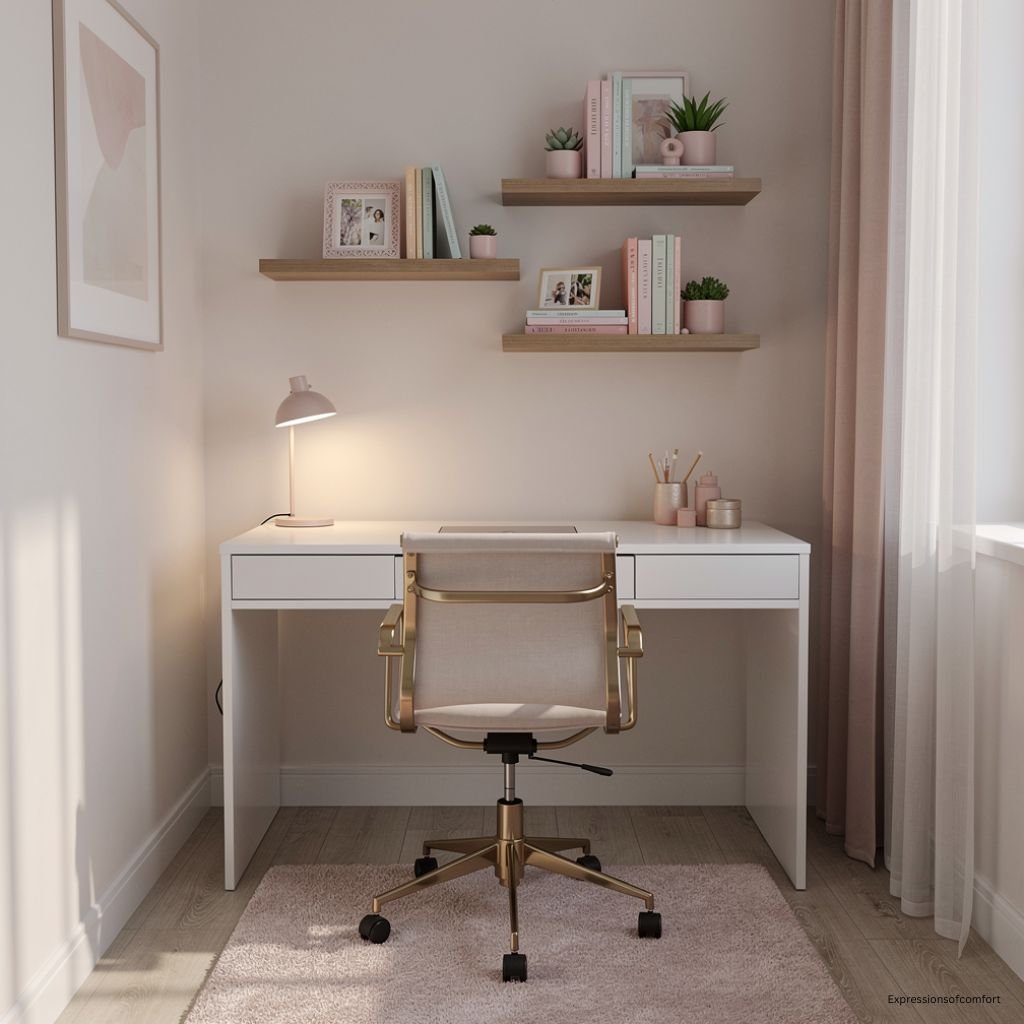
Choose Furniture that Works Harder
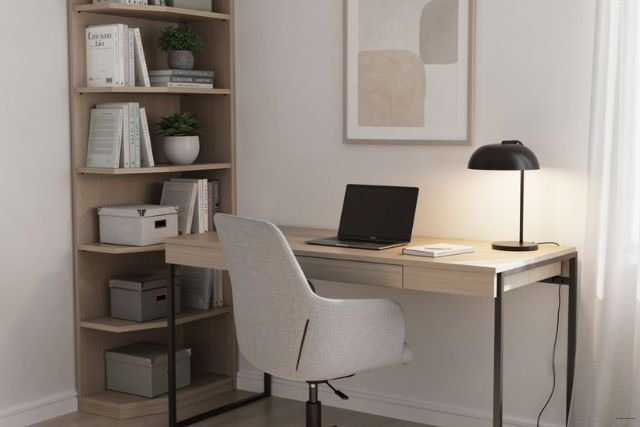
When space is limited, each piece of furniture needs to earn its place. In 2026, compact desks, ladder desks, floating desks, and other slim profiles are popular because they save floor space while still giving you a useful work surface.
A desk does not need to be huge. It only needs room for your laptop, a notebook, a lamp, and maybe one pretty object that makes you smile.
Look for furniture that can do more than one job. A storage bench can hold office supplies and offer extra seating. A small cabinet can hide paperwork and double as a printer stand. A nearby accent chair can give you a place to read, plan, or take a break. Multi-use furniture is a big part of current home office design because it helps small rooms stay flexible and uncluttered.
Comfort matters just as much as size. An office chair with soft support, a desk at the right height, and a setup that feels easy on your body can change the whole day. Home office trends for 2026 also lean toward comfort first design with upholstered seating, warm materials, and pieces that blend with the rest of the home.
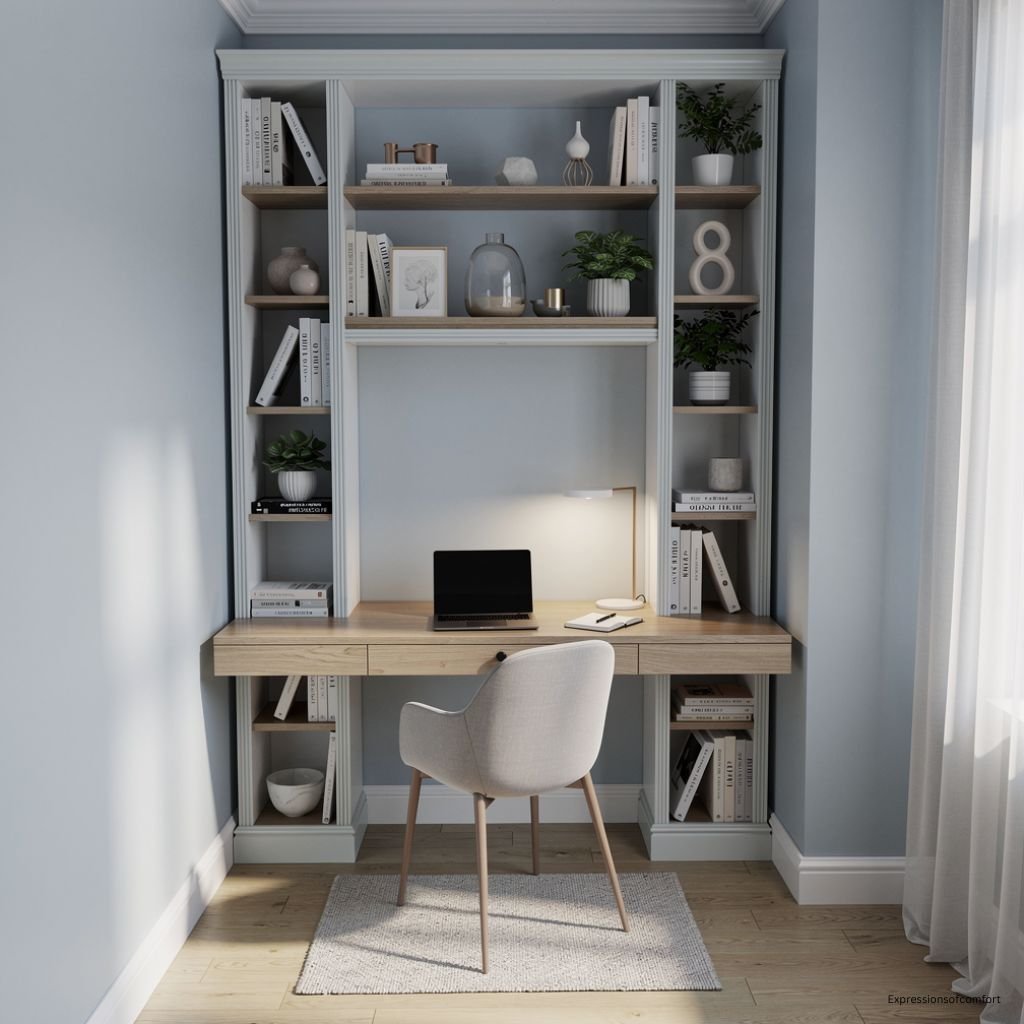
Use Your Walls and Hidden Storage
In a small home office, your walls are valuable space. Wall shelves, peg rails, floating cabinets, and mounted organizers keep everyday items off the desk and make the room feel less crowded.
This is where smart storage really shines. Use baskets for cords and chargers. Add a small drawer unit under the desk. Place a shelf above the monitor for books, bins, or framed prints. When everything has a home, the space feels more peaceful and easier to use.
Closed storage can be especially helpful in shared rooms. A cabinet with doors hides paper clutter fast, which matters when your office sits in a bedroom or family room. Clean surfaces reduce distraction, and designers continue to stress storage forward choices for exactly that reason.
Cable control is another simple win. Tidy cords make a small office look cleaner, safer, and much more polished. It is a small detail, but it has a big effect.
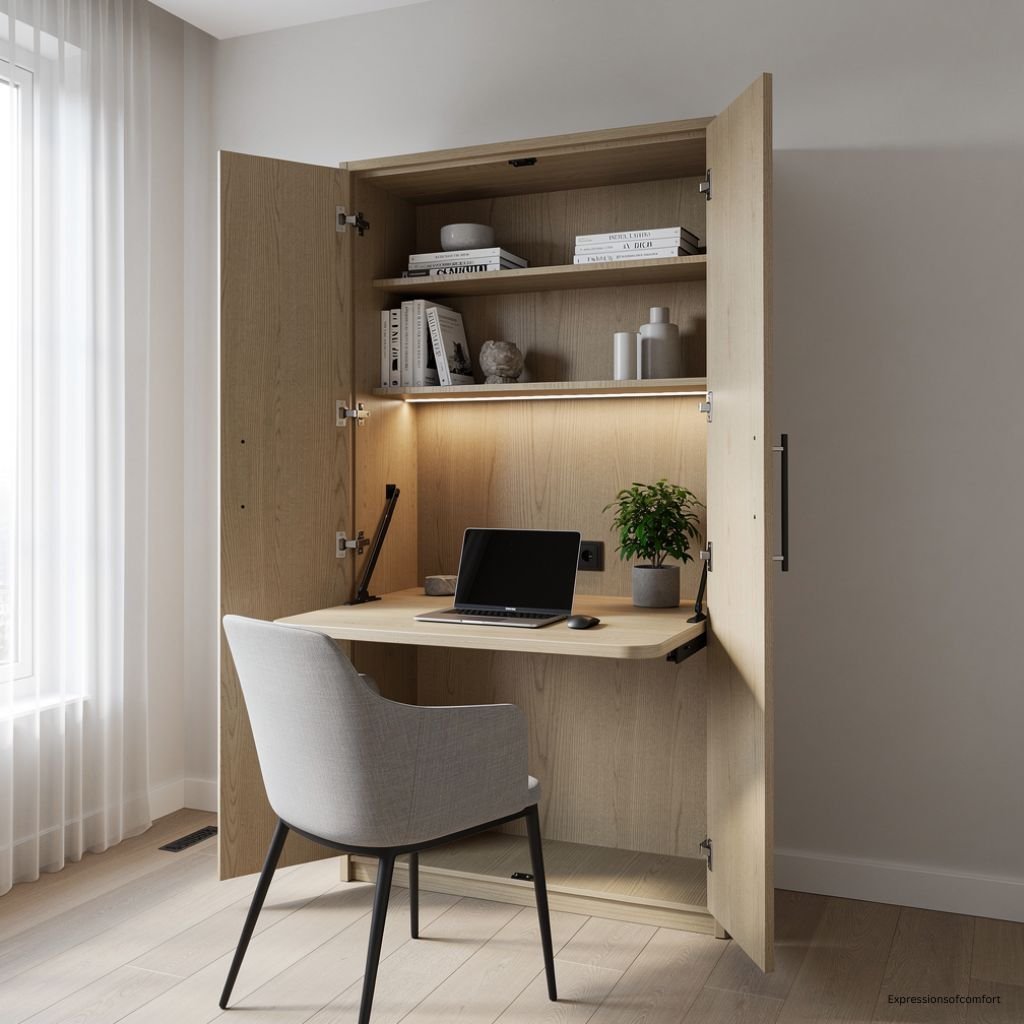
Layer the lighting
Lighting can make or break a home office. Designers recommend layered lighting because one ceiling light is rarely enough for comfort, focus, or style.
Start with ambient light. That is your general room light. Then add task light, such as a desk lamp, so you can see clearly when reading or typing. After that, bring in a softer accent light like a wall sconce or table lamp to add warmth and depth. This layered approach helps a small office feel both bright and cozy.
If you can, place your desk near a window. Side light often works best because it helps reduce screen glare while still giving you the benefit of daylight.
At the same time, watch for harsh shadows. An adjustable lamp can help direct light where you need it most, especially in an alcove or a dark corner.
The goal is simple. You want a workspace that feels clear in the morning, steady in the afternoon, and soft in the evening.
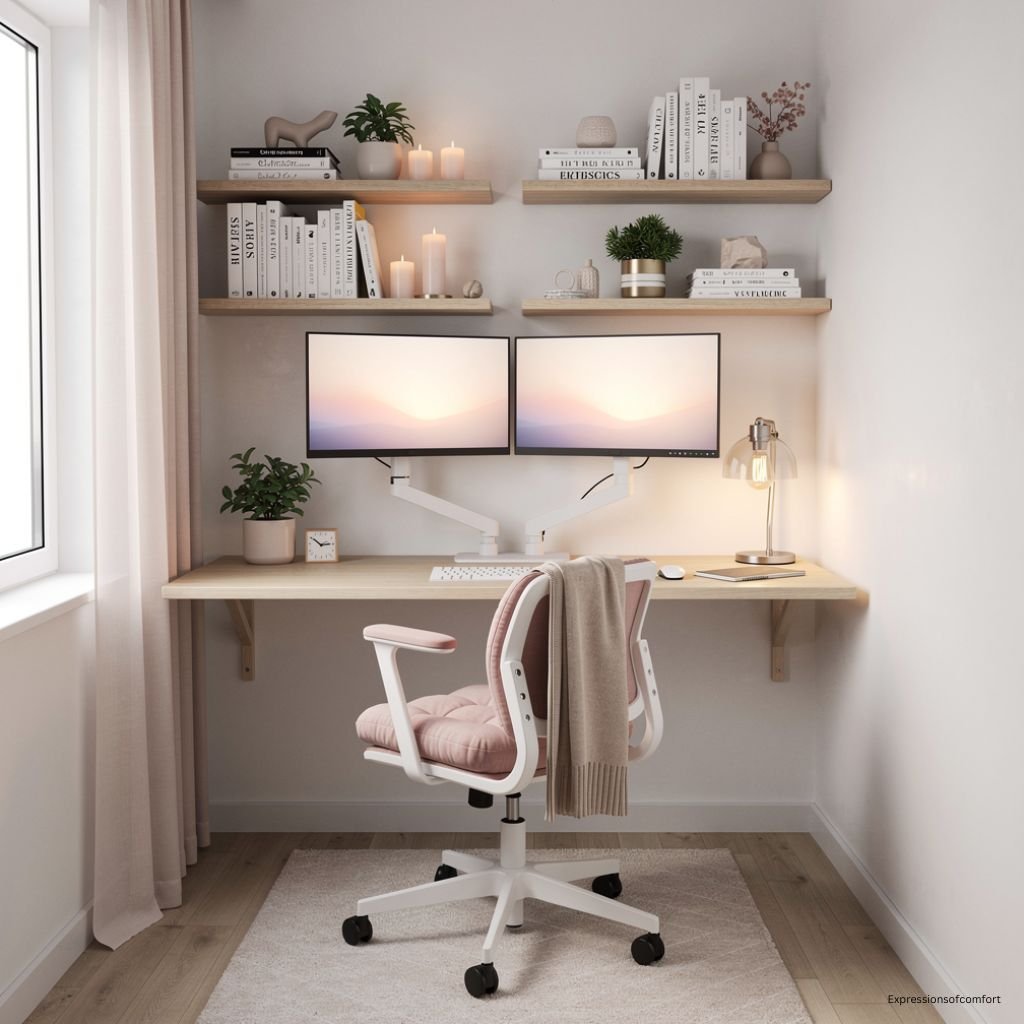
Add Warmth Without Adding Clutter
A stylish home office does not need a lot of decor. In fact, a small space usually looks better when you use fewer pieces with more intention.
1. Start with texture.
In 2026, warm wood, woven baskets, soft rugs, throw pillows, and natural finishes are key parts of cozy office design. These details soften the work zone and help it feel like part of the home.
2. Add a little plant life.
Plants remain a favorite in small home offices because they bring color, freshness, and a calmer feel to the room.
3. Add art to help bare walls.
One framed print, a mood board, or a simple shelf with books and personal objects can make the area feel finished without crowding it. This matters even more if you take video calls and want the background to look neat and thoughtful.
4. Keep the color palette simple.
Warm neutrals, natural greens, soft beiges, and light woods are all strong choices for a calm and stylish office. These shades are popular because they feel easy to live with and pair well with compact furniture.
Make the Space Feel Like Yours
A functional office is good. A personal office is better.
Once the basics are in place, add a few details that reflect your style. That could be a candle, a linen pin board, a ceramic mug for pens, or one favorite photo on the shelf. These small touches help the room feel less like a work station and more like a place you want to spend time in.
You can also create comfort through routine. Keep a throw over the chair. Use a tray for daily essentials. Set out a coaster, a notebook, and one good pen. Simple details like these make the space feel ready when you sit down.
If your home office shares space with another room, create a visual boundary. A rug, a bookshelf, or a small screen can help separate work from home life. Designers continue to value privacy and flexible layouts, especially in homes where one room needs to serve several purposes.
Easy Ideas to Try This Week
If you want a quick refresh, start here.
- Move your desk closer to natural light.
- Add a task lamp and one softer accent light.
- Use one wall shelf to clear the desk surface.
- Swap bulky furniture for a slimmer desk or a floating option.
- Bring in one basket, one plant, and one framed print for warmth and style.
- Hide cords and extra supplies so the room looks clean and calm.
A small home office does not have to feel plain or cramped. With smart storage, better lighting, compact furniture, and a few soft details, you can create a space that looks stylish, feels cozy, and helps you focus with less stress.